
Bridal mehndi is the centrepiece of a South Asian wedding look. A full bridal design usually covers both palms, the backs of the hands, the forearms and often the feet, with dense paisley, peacock, floral and mandala work. Because it is worn in every wedding photograph, it is worth choosing the style, the artist and the timing carefully.
What makes a design bridal?
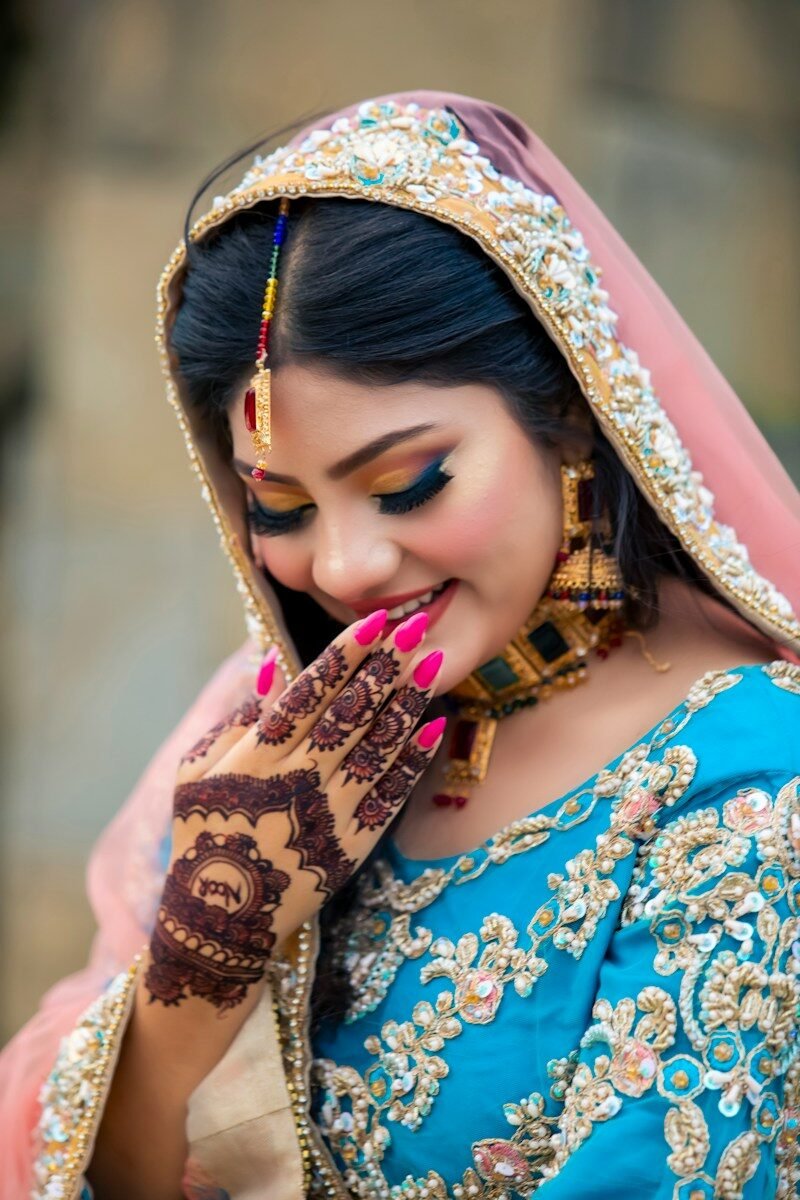
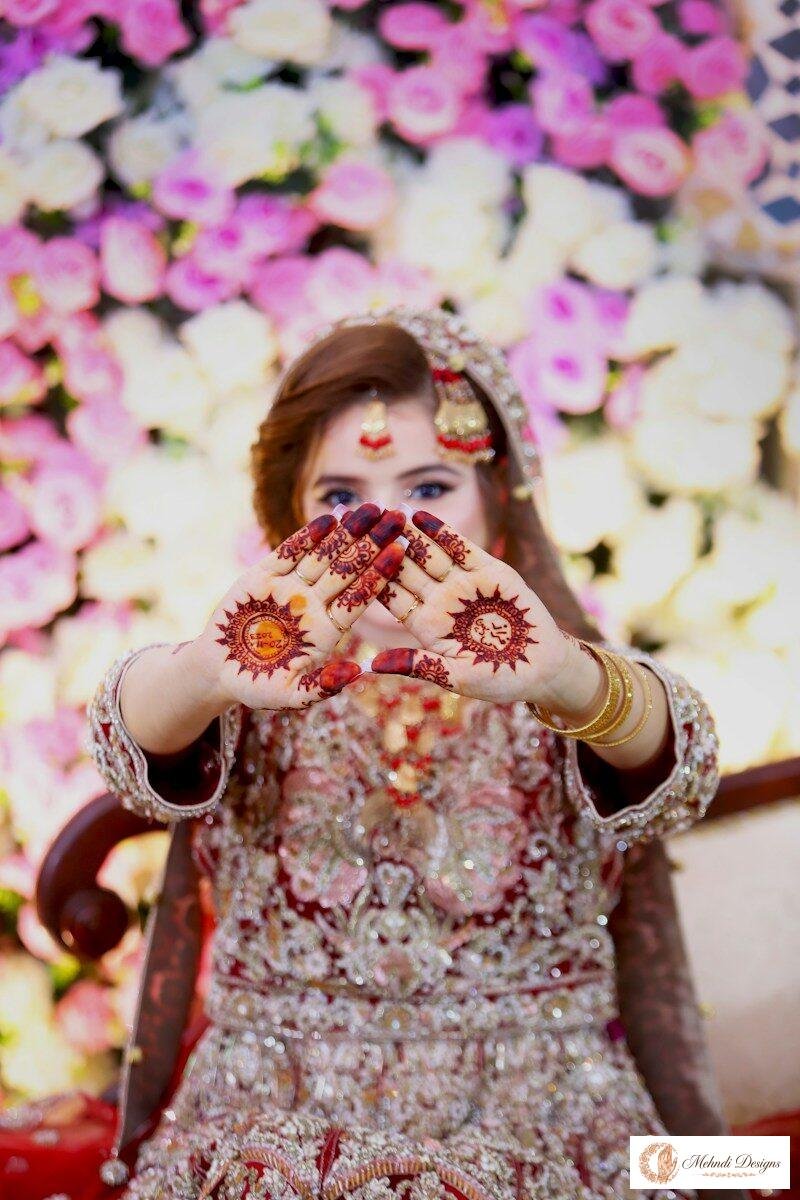
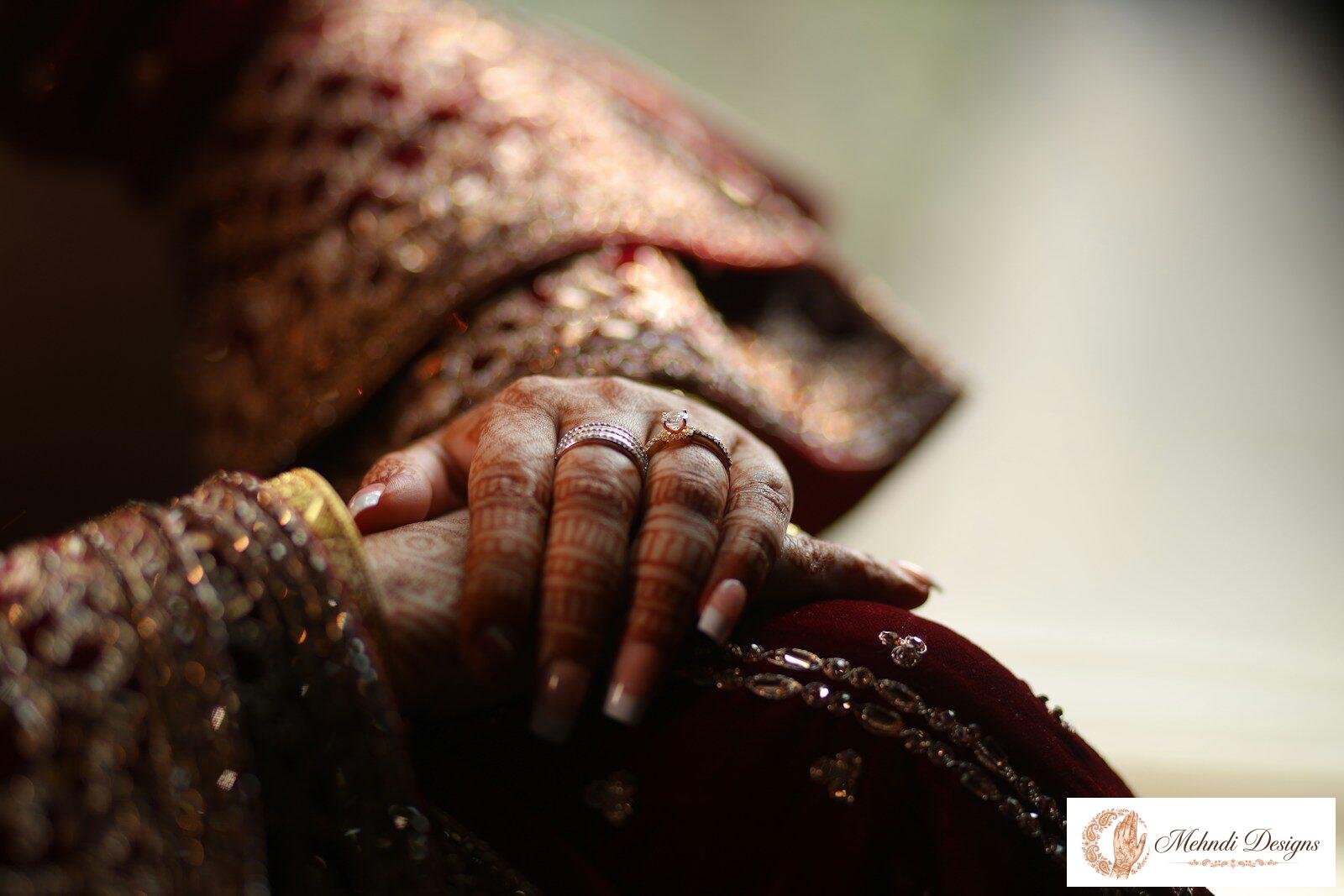
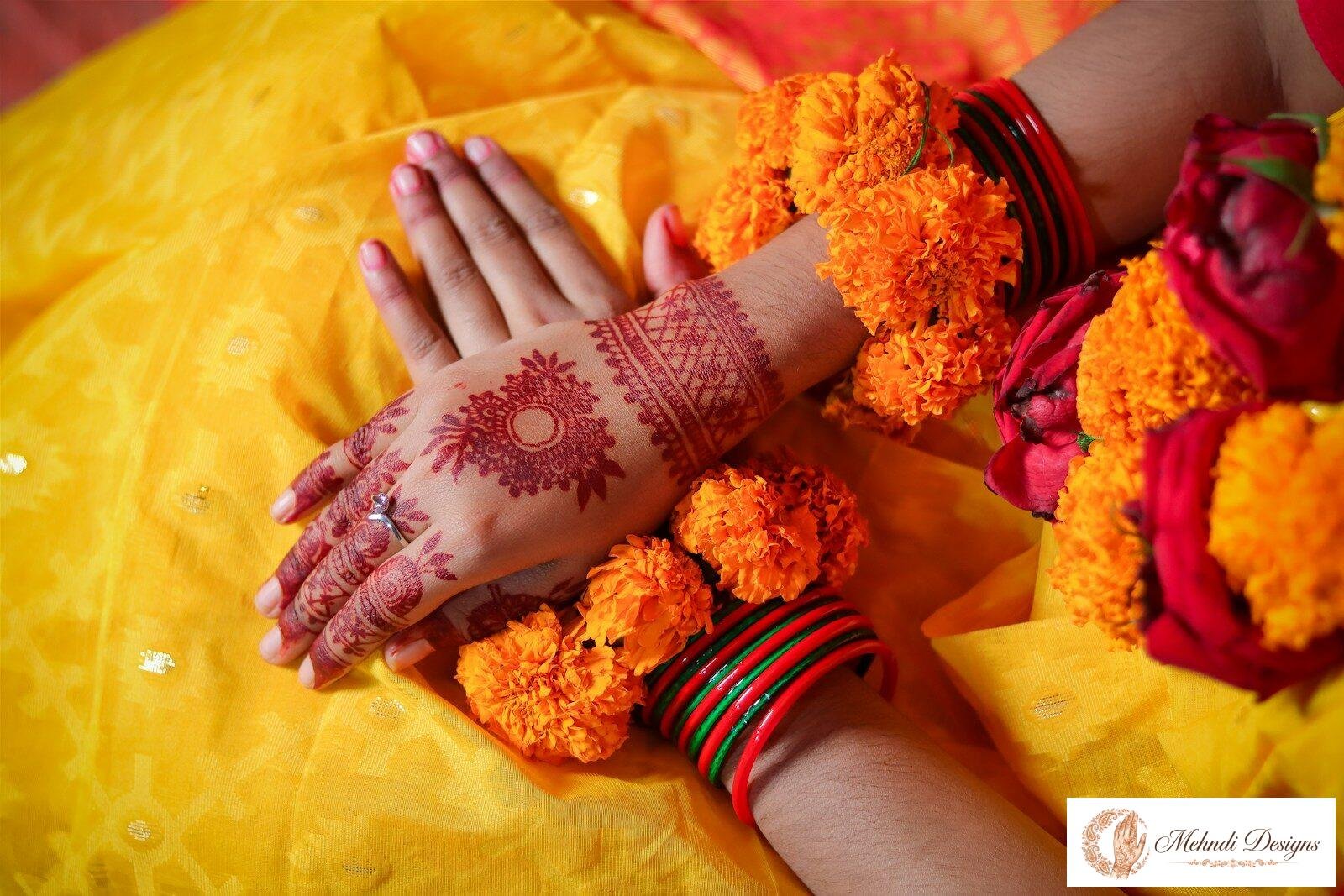
Bridal henna is denser and more detailed than everyday henna. The palm is usually filled almost completely, the fingers are covered to the tips, and the design runs well up the arm. Common motifs are paisleys, peacocks, lotus flowers, mandalas, jaali (lattice) work, and small hidden details such as the groom’s initials, which guests love to look for in photographs.
How to choose your bridal design
- Match your outfit: heavy embroidery suits a dense, traditional design; a lighter outfit suits a slightly more open design with breathing space.
- Think about your hands: long, fine lines suit slim hands; bold paisley and large mandalas suit broader hands.
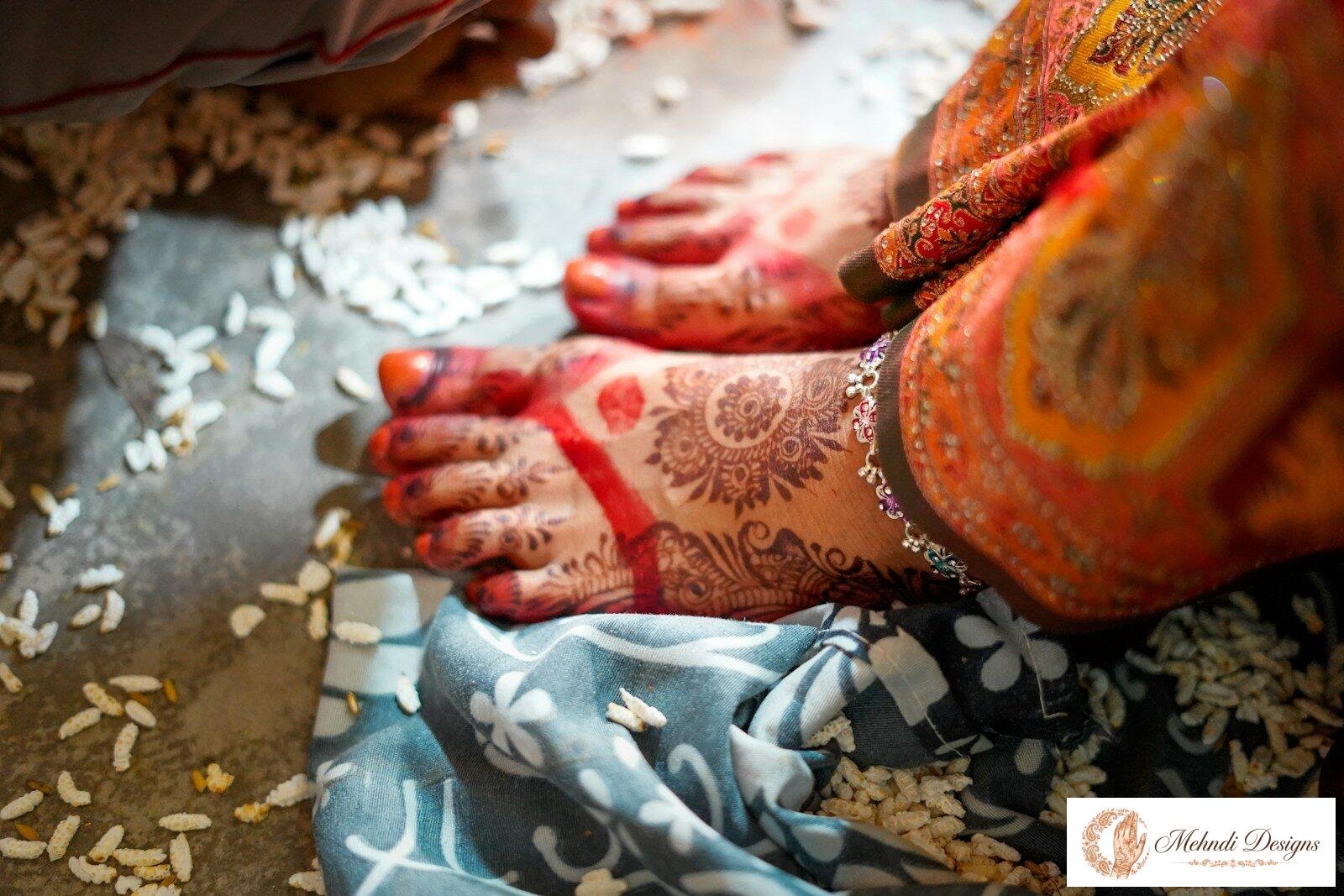
- Decide the coverage: full-hand to the elbow is classic, half-arm is lighter and quicker, and feet designs complete the look for the ceremony.
- Book early: good artists are booked weeks ahead in wedding season, and a trial patch is wise if your skin is sensitive.
Step by step: your bridal mehndi day
- Wash your hands and do not apply lotion or oil before the session, so the paste grips the skin.
- Sit comfortably with good light; a full bridal application takes 3 to 6 hours.
- Let the paste dry naturally. Do not use a hair dryer on high heat.
- Keep the dried paste on for at least 6 hours, overnight if you can, for the darkest stain.
- Scrape the paste off – do not wash it off with water. Rub a little mustard or coconut oil over the stain.
- Avoid water for the first 12 hours after removing the paste; the colour deepens over the next day.
Tips for a dark, long-lasting stain
Keep your hands warm, avoid soap and water on the first day, and apply a sugar-lemon sealant while the paste dries if your artist recommends it. The stain is usually darkest 24 to 48 hours after application, so plan your mehndi one to two days before the wedding.
Frequently asked questions
How long does bridal mehndi last? On hands, about 1 to 2 weeks, fading gradually. Feet fade a little faster because of washing.
When should I get it done? One or two days before the wedding, so the stain is at its darkest on the day.
Is bridal mehndi painful? No. Henna is applied on the skin with a cone; it feels cool and ticklish, not painful. Tell your artist if your skin feels hot or sore, as that can be a sign of a chemical in the paste.
Can I choose a simpler bridal design? Yes. Many brides now choose a medium-density design with open space – it photographs beautifully and takes less time.
Browse more ideas in our Bridal Mehndi Designs gallery, and compare with Arabic and Simple styles before you decide.
What is bridal mehndi, and where does it come from?
Bridal Mehndi Designs are the full, detailed henna patterns applied to a bride’s hands, arms and feet for her wedding. Unlike a small everyday motif, a bridal design is a complete composition: both palms are filled, the backs of the hands are covered, the pattern runs up the forearms, and the feet are decorated to match. The paste is made from dried henna leaves, and when it is removed it leaves a reddish-brown stain that deepens over the next day or two, so the design is at its richest on the wedding day itself.
Henna has been used for celebrations across South Asia, the Middle East and North Africa for centuries. In weddings it is much more than decoration. The mehndi ceremony, often held a day or two before the wedding, brings the bride’s family and friends together to sing, eat and watch the design take shape. In many families the groom’s initials are hidden inside the design, and finding them is a playful tradition. A dark stain is talked about fondly as a sign of the husband’s love and the warmth of the new family, which is why the timing and aftercare in this guide matter so much.
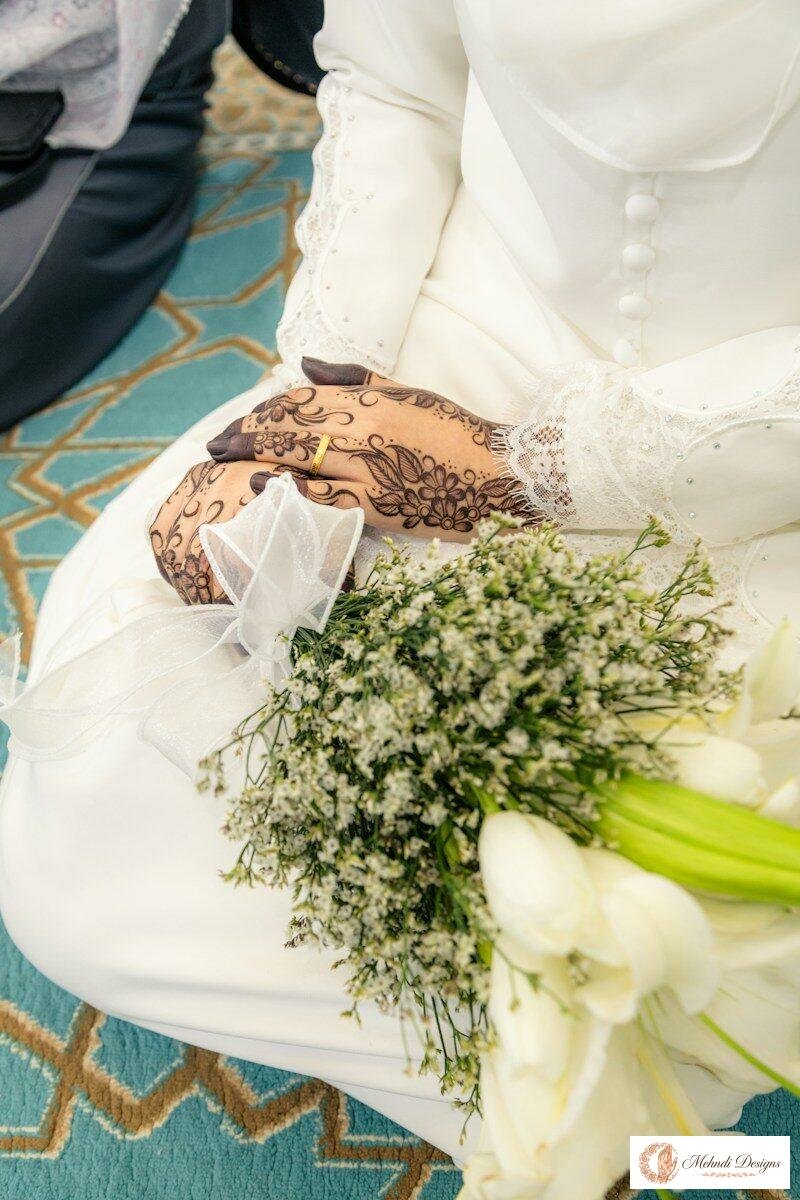
Today, Bridal Mehndi Designs are chosen as carefully as the dress. Brides look at the density of the pattern, the motifs, the coverage and the artist’s hand, and many have a trial session first. The sections below explain the main styles, how to match a design to your outfit and skin tone, and how to get the darkest safe stain.
Types of bridal mehndi designs
Indian bridal mehndi is the most detailed style. It fills the whole hand and forearm with dense, fine work: paisleys, peacocks, lotus flowers, jaali lattice and the couple’s initials hidden in the pattern. It takes the longest to apply, usually four to six hours, and suits a traditional lehenga.
Pakistani bridal mehndi is close to the Indian style but uses larger motifs and more open space, with bold outlines and detailed filling inside each motif. It is a good choice if you want a rich look that still shows some skin, and it photographs beautifully on both hands together.
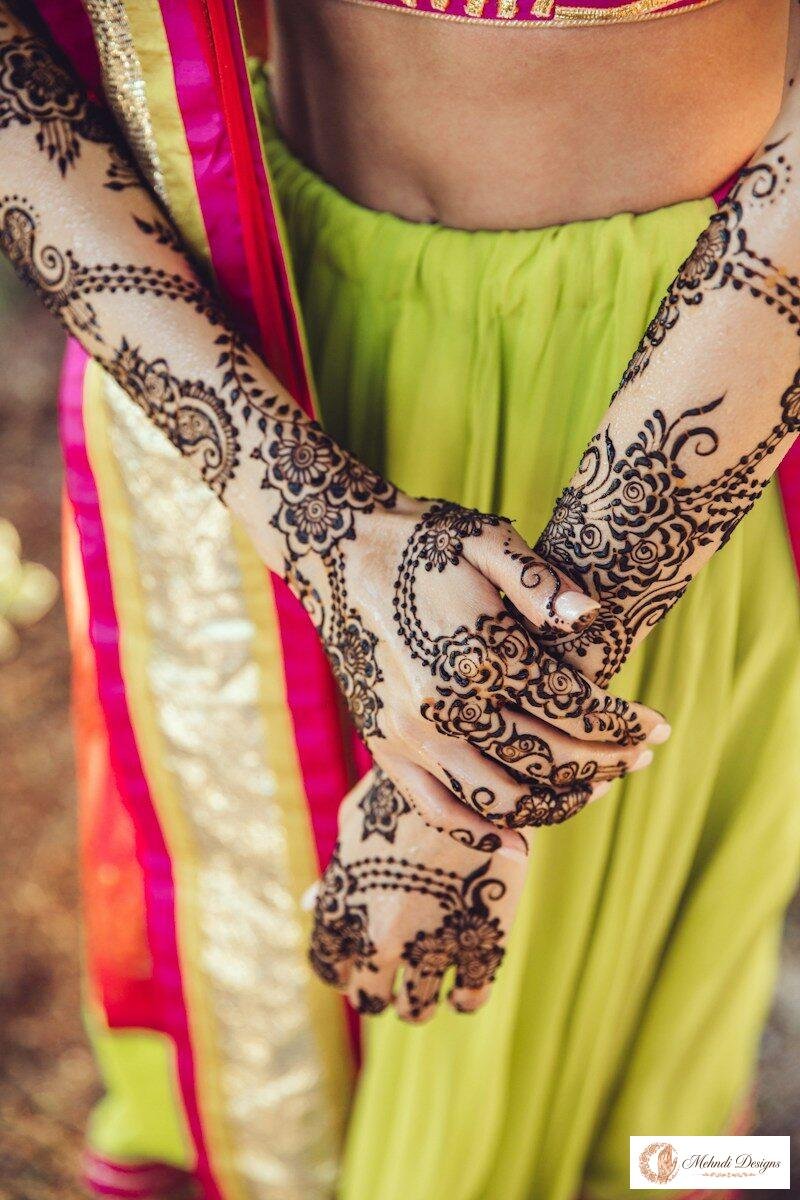
Arabic bridal mehndi is bolder and more open. It uses thick floral trails, leaves and vines that run diagonally across the hand and up the arm, leaving large areas of skin clear. It takes about two to three hours for both hands and suits a modern or lighter outfit.
Rajasthani bridal mehndi is known for fine, dense detail and traditional motifs such as the peacock, bride and groom figures, and bandhani-style dots. It needs a skilled artist and a long sitting, but the result is one of the most detailed bridal looks.
Indo-Arabic fusion mixes the two: a dense Indian-style palm with an Arabic-style trail on the back of the hand and forearm. It gives you the richness of a bridal palm and the lighter, modern feel of Arabic work. If you cannot decide between the two styles, fusion is the easiest compromise.
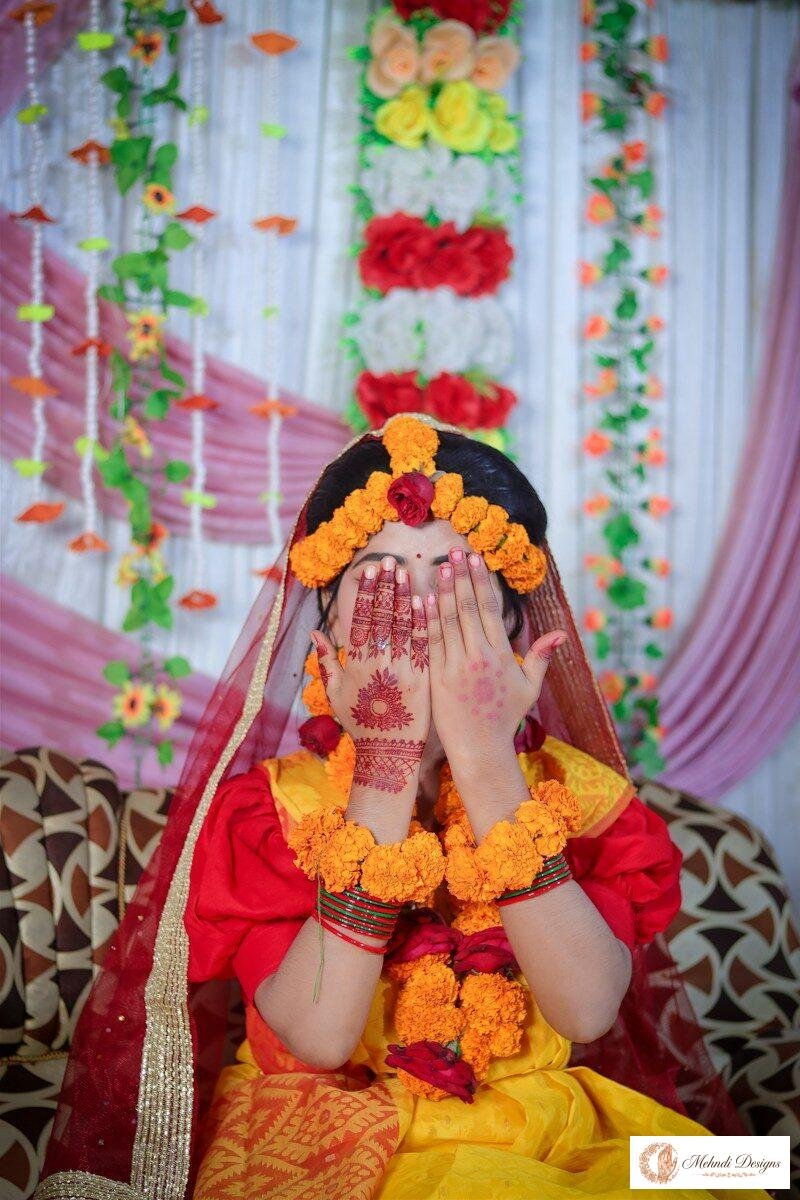
How to choose bridal mehndi by outfit, skin tone, theme and season
By outfit: match the density of the design to the density of your embroidery. A heavily embroidered lehenga suits a dense Indian or Rajasthani design. A lighter outfit, a pastel dress or a modern gown suits a more open Arabic or fusion design, so the mehndi does not overpower the dress. If your outfit is pale, ask for bold outlines so the design reads clearly in photographs.
By skin tone: henna stains reddish-brown on every skin tone, but the contrast looks different. On fair skin the stain looks deep red-brown and fine detail shows clearly, so a detailed design works well. On medium and deep skin tones the design reads best when the lines are bold and the motifs are large enough to see from a distance, so choose clear paisleys, mandalas and floral trails rather than very fine lines that can blur together.
By wedding theme: a traditional ceremony suits a classic full-hand Indian or Pakistani design with the groom’s initials hidden inside. A modern, minimalist wedding suits an Arabic trail or a fusion design with open space. A garden or daytime wedding suits lighter, floral work, while an evening reception suits a denser design that still shows in warm light.
By season: in summer, henna dries faster, but sweat can smudge fresh paste, so sit in a cool room. In winter, the paste dries slowly and the stain can be lighter, so keep your hands warm and apply the mehndi a little earlier. In humid weather, allow extra drying time and avoid water on the first day.
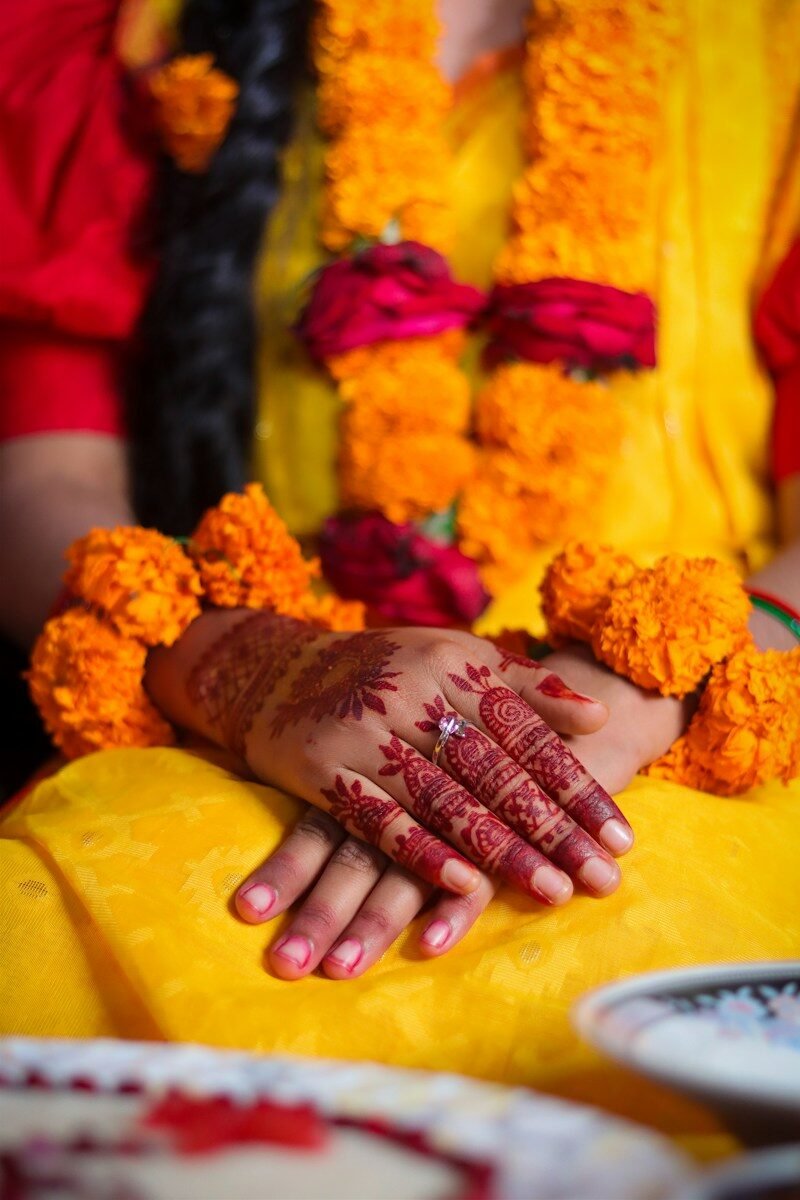
Timing: when to apply bridal mehndi and how long it takes
Apply bridal mehndi one or two days before the wedding. The stain is brightest on the first day and deepens over the next day, so it is at its richest on the wedding day and still fresh for the reception. If you apply it three days early, it will already be starting to fade on the hands by the wedding day.
How long does it take? A full bridal application for both hands to the elbow and both feet takes about four to six hours with one artist. A medium-density design takes about three to four hours, and a simpler Arabic-style trail takes about two to three hours. If two artists work together, one on each hand, the time can be cut almost in half. Add at least an hour after the application for drying before you need to use your hands.
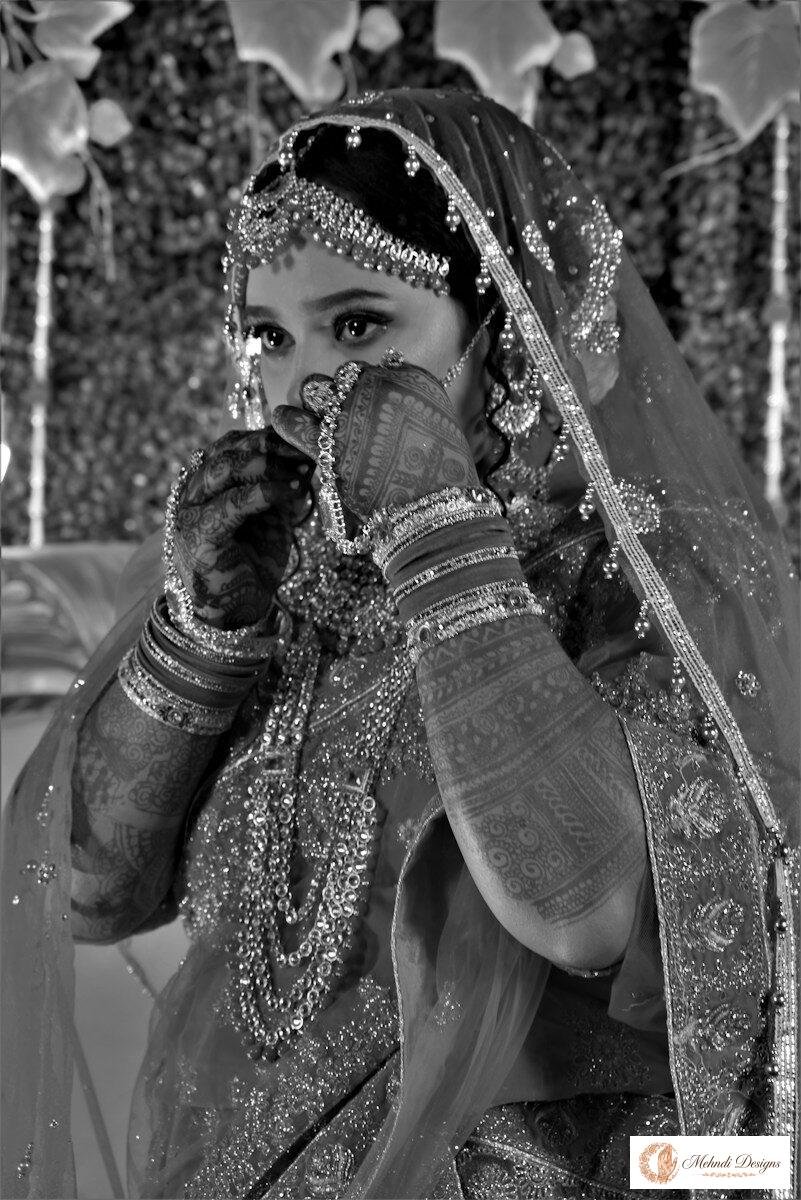
Aftercare for a dark stain
The first twelve hours decide how dark your stain will be. Keep your hands warm, because warmth helps the colour develop: wear gloves, a shawl or warm sleeves after the paste is removed. Avoid water, soap and washing-up for the first day, and use oil instead of water to clean your hands. A sugar and lemon sealant while the paste is drying helps it stick, and a rub of mustard or coconut oil after removing the paste seals the stain in. Avoid chlorine, swimming and long baths for the first two days. The stain will be darkest on the palms, where the skin is thick, and lighter on the arms and feet, which is normal. A well-cared-for bridal stain lasts about one to two weeks on the hands.
Patch test and black henna safety warning
Before your wedding, do a patch test. Apply a small amount of the same henna paste your artist will use to a small area, such as the inside of your arm, leave it on for a few hours, then wait at least 24 hours. If you get redness, itching, swelling or blisters, do not use that paste, and tell your artist and a doctor if the reaction is strong. This matters most if you have sensitive skin, eczema or a known allergy, and it is the reason we already advise a trial session in the choosing section above.
Be careful with black henna. Natural henna is reddish-brown and never jet black. A paste sold as black henna often contains a chemical called PPD, which can cause serious burns, blisters, scarring and a lifelong allergy, and it can also react badly with hair dye. Do not use black henna, and do not let anyone apply it to you, especially a child. If an artist offers a very dark, fast-developing black stain, ask what is in the paste and walk away if you are not sure. Use only natural henna paste made from henna leaves, water or lemon juice and essential oils such as eucalyptus or tea tree, and ask your artist to show you the paste and its ingredients before the session.
Cost and time expectations
Costs vary by city, artist and coverage. A full bridal application from an experienced artist takes four to six hours and costs more than a simple design, because you are paying for the artist’s time and skill. Agree the price, the coverage, the number of artists and the start time before the day. Book three to four weeks ahead in wedding season, and confirm the booking a week before the ceremony.
Common mistakes to avoid
Do not apply lotion or oil before the session, because the paste will not grip the skin. Do not wash the paste off with water, and do not go swimming or take a long bath on the first day. Do not use a hair dryer on high heat to dry the paste, and do not pick at the flakes while they are drying, because that pulls the paste off early and leaves a patchy stain. Do not choose a design that is too fine for your skin tone, and do not skip the patch test if you have sensitive skin. Do not leave the booking to the last week, and do not forget to eat and rest before the session, because a full bridal application is a long sitting.
More questions about bridal mehndi designs
How long does bridal mehndi last? On the hands, about one to two weeks, fading gradually. On the feet it often lasts a little longer, because the feet are washed less often.
When should I get bridal mehndi done? One or two days before the wedding, so the stain is at its darkest on the day. If you have a mehndi ceremony, that is usually the day it is applied.
How can I make my bridal mehndi darker? Keep the paste on for at least six hours, or overnight, use a sugar and lemon sealant, keep your hands warm after removing the paste, and avoid water for the first twelve hours.
Is bridal mehndi painful? No. Henna is applied on the skin with a cone; it feels cool and ticklish, and there is no pain. If the paste burns or itches strongly, wash it off and tell the artist, because that can be a sign of a chemical in the paste.
What is the difference between bridal and Arabic mehndi? Bridal mehndi is usually dense and covers the full hand, forearm and feet, while Arabic mehndi uses bolder, more open floral trails with clear skin between them. Many brides choose a fusion of the two.
Can I choose a simpler bridal design? Yes. Many brides now choose a medium-density design or an Arabic-style trail, which is faster to apply, easier to sit through, and still looks bridal in photographs.
For more ideas, see our Arabic Mehndi Designs guide, our Simple Mehndi Designs guide, and our Feet Mehndi Designs guide. The photos in this guide are free Unsplash photos by the photographers named in each caption, cropped and watermarked with the Mehndi Designs logo by the Mehndi Designs Editorial Team; they are edited Unsplash photos, not original photography.
What is dulhan mehndi design?
Dulhan mehndi design is the bridal mehndi design worn by a bride (dulhan) for her wedding — full-hand henna with paisley, flowers and lattice, applied one or two days before the wedding. This bridal mehndi design 2026 guide also works as a mehndi design for Eid, when a fuller design is wanted.
Related Designs: see our Arabic Mehndi Designs guide, Simple Mehndi Designs guide, Feet Mehndi Designs guide, Intricate Floral Bridal Mehndi — Full Hand, and the Bridal Henna Photo Gallery.


The Mehndi Designs Editorial Team is a team of henna design researchers and writers who test and review mehndi designs. We research bridal, Arabic, simple and feet mehndi, compare styles, application time and stain results, and explain each design in plain language so readers can choose a design that suits their outfit, occasion and skin tone. Our guides are based on traditional henna practice, artist advice and hands-on testing of designs, and every design is checked for clear motifs, placement and aftercare before it is published.